

A Guide to Table Reads in TV and Film
A Guide to Table Reads for TV and Films has to begin with a definition for the uninitiated: What is a Table Read? Okay, so, a Table Read is a session where the cast of a project reads a script aloud, together, so writers, directors, producers and Studio Execs can hear the dialogue, pacing, and tone before rehearsals or shooting. It’s a vital step for multi-cams and comedies for both TV and film, and a helpful-but-not-as-vital step for procedurals and VFX-heavy productions that are just going to ADR all the dialogue anyway.
But the Table Read can also be a way for a bunch of famous folks to raise money for charity by reading a classic script either in person, or over Zoom, or some mixture of both. Not all Table Reads are for a production, but they’re all from something that aims to be a production, if that makes sense.
READ THROUGHS FOR TV AND FILM
WHAT ARE YOU READING AT THE TABLE READ?
First off, this wouldn’t be a good Guide to Table Reads if we didn’t talk about, you know, what’s actually getting read at said table. You need something to read before you can hold a Table Read for anything, obviously. That is where the Table Read script enters the conference room.
For television, the Table Read Draft is a clean copy of a new script, ready to be seen by the cast and crew for the first time. It’s when the script takes a step away from the writers’ room and into the real world, ready to get noted and dissected by cast, crew, and execs who’ve been told the script ‘was on its way’ for anywhere from an hour to multiple weeks.
For film, the Table Read can happen as a way to get some momentum behind the project for producers and writers, casting friends and cashing in favors to get a good response to the material and (hopefully) get closer to getting the thing made.
Table Reads for film can also happen after all the checks have been cut, and the cast is assembled for the first time to see what they have ahead of them.
In any medium, the Table Read should serve as a diagnostic; what is working, what isn’t, what’s too long, what needs more time, what jokes killed and which lines need to be killed.
As a Table Read example, here’s the cast of Big Mouth performing their final script:
VIRTUAL TABLE READS
WHERE IS THE TABLE READ?
Do you have a call time? Or a Zoom link? That’s the biggest difference for Table Reads in TV & Film; in person or remote.
They can look a lot like this in person (minus the legacy droids); comfy seats and paper scripts for actors somewhere backstage. If you’re at one of these, and not participating, you’re likely sitting in a folding chair facing the actors, script or tablet in your lap ready to read along.

A remote Table Read for TV & Film is every Zoom meeting you ever had, right down to the ‘Can you mute yourself, please?’ and ‘Can you unmute yourself, please?‘ at various times of the event. Not reading and not above the line? Be sure to turn that camera off when you mute yourself. If you haven’t muted yourself, already.
SCRIPT READ THROUGHS FOR ACTORS
HOW TO PREP FOR YOUR TABLE READ
Read the script, obviously. Know the story. If it’s a Table Read for an existing series, and you’re not familiar with the cast and characters? You should do a little research and viewing to know who’s who and how the show normally unfolds.
If you’re playing a part, then definitely rehearse at least once before the read. You don’t want the first time you say the words to be at the table. That is, unless that’s your process. Each actor has their own, and the point of the read through is that the script is available for the performers (so you don’t have to be off book).
If you’re reading a Pilot for Network Execs? Be sure to read it as if to not be recast. Which is a way to say, ‘Yes, they can fire you from the role if you have a bad table read, new person.”
If you’re the one reading the Stage Direction? DEFINITELY read it aloud once, so you’re building the read out for the listeners and it’s important you not stand out. The best Table Read narrators are heard, not seen, and not remembered, because they kept things moving and let the actors do their thing.
BEST TABLE READ APPS
Table Read apps can do a lot of different things; scroll the script along for you, read the dialogue aloud for you or your team, or even just allow you to view existing table reads like the ones we’ve showcased above or you can find on Youtube.
That’s where Scriptation leads the pack when it comes to apps for Table Reads in TV and Film. Whether you’re writing, reading, listening or acting, Scriptation can provide the specific Table Read help you need:
SCRIPTATION’S TABLE READ TOOLS FOR ACTORS
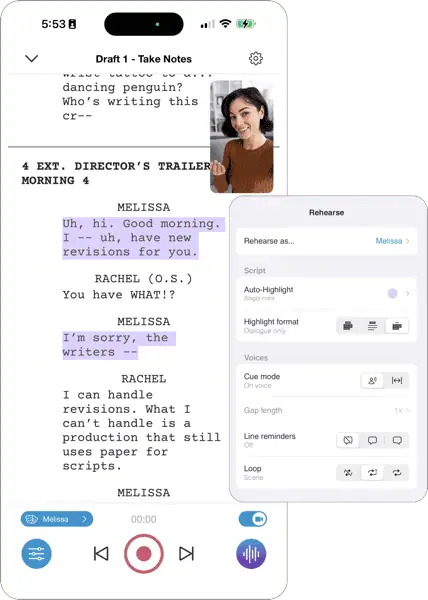
With the launch of Playback, Scriptation’s suite of tools for actors, prepping a Table Read has never been easier. Use the Rehearse tools to read the lines without a scene partner, work on memorizing that monologue, and even self-tape a section for your own peer review.
For the read itself, be sure to use the Scriptation Highlight feature to easily track your character and their lines throughout the script, so you never miss a cue.
SCRIPTATION’S TABLE READ TOOLS FOR WRITERS
As you listen to your project’s brilliant actors performing your Table Read brilliantly, annotate the script in real time with your thoughts and notes for later. A quick check mark next to a line indicates a joke that landed; a negative sign, a sad face, or a P (for “Punch”) shows a line that needs a little more seasoning.
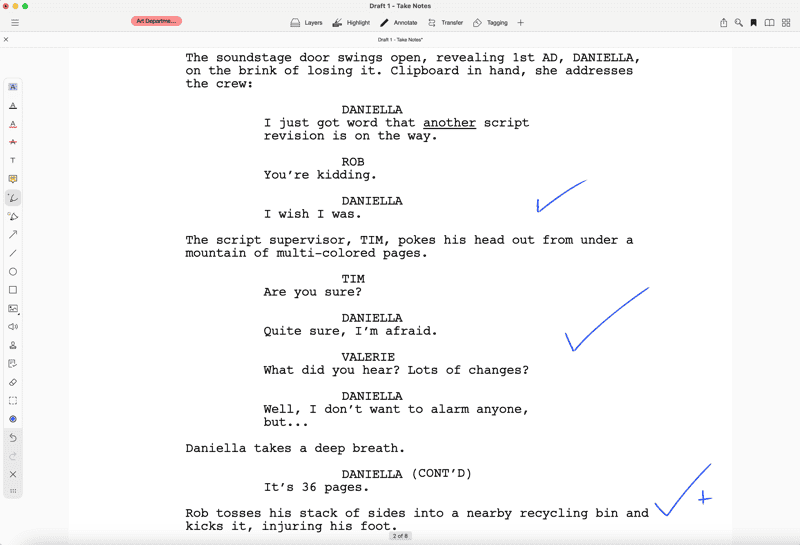
You can also use Scriptation’s Playback scroll function to auto navigate the script for you, so you can focus on things beside scrolling.
Scriptation Layers means you can keep all these notes separate from your prep, production, tone, and any other set of notes that weren’t Table Read thoughts. You know who else loves Layers?
SCRIPTATION’S TABLE READ TOOLS FOR DIRECTORS
Directors LOVE Scriptation Layers. Directors wear a lot of hats in a production, which is where having the ability to break their thoughts down into different, department and meeting-specific Layers can be such a time saver.
When it’s time to Table Read, Directors need to lock in. Whether they’re reading the stage direction, listening quietly in the corner, or also playing the lead character, Directors can make the most of their Table Read with Scriptation.
Check out this guide for Directors on annotating their PDFs in Scriptation to get a sense of how the Table Read can inform their blocking, performance notes for shooting, photos of that perfect location and so much more:
SCRIPTATION’S TABLE READ TOOLS FOR CREW MEMBERS
Whether you’re a Script Supervisor, APOC, Department Head or Office PA, Scriptation’s Table Read tools can help make your job easier and save you a ton of time, headaches, and paper. No matter how you approach the read through, you’ll be glad you had it in the best Table Read app available in the App Store.
Download Scriptation in the App Store today and start your two week free trial!
FAQ FOR READ THROUGHS IN TV & FILM
TABLE READ FAQs
CAN YOU DO A TABLE READ BY YOURSELF?
Miss the Table Read altogether? Too busy reading to make notes? Or just not get invited into the standing-room-only room? Then hold your own with Scriptation’s Table Read preset in Playback. The Table Read preset automatically casts all the parts with different distinct voices, and only has a narrator read the Scene Headings and Stage Direction. It’s literally a Table Read on demand, without having to get actors, microphones, or even chairs.
WHAT OTHER INFO CAN YOU GET FROM A TABLE READ?
Besides gauging performance, strengths of the script and overall presentation, you can learn a lot about how seriously an actor takes their performance. If they’re squinting at an iPhone clearly seeing the words for the first time, prep isn’t a big part of their process. If they’re giving you a camera-ready performance, then you know when the scene gets to the stage it’s going to be pretty special.
Another key detail is finding out just how long the script is reading. Timing is a key piece; if you only have a few minutes of air time, your script shouldn’t time out at twice the length. If so? Time for some cuts.
WHO TIMES A READ THROUGH?
Script Supervisors are most often the ones clicking ‘start’ on the stopwatch, but UPMs, Line Producers, and ADs can also keep an eye on the length of the read to let writers and producers know whether the production’s read through is running long (often), short (rarely), or just right (if you find out what this time is, let us know).
HOW LONG SHOULD A TABLE READ TAKE?
Using the rule of roughly a minute a page, a Table Read should fit the runtime your project has ahead of it. If you have a deal with a studio that your feature won’t go over 100 minutes, then the Table Read shouldn’t clock in at two hours. Same for TV, you want to fit the half-hour and hour-long slots your show fills when it airs. If it’s streaming, then your studio will likely have guidelines they want you to hit.
It’s okay to go a little over; you’ll likely want to be able to cut some material that doesn’t work in the editing room.
DO ONLY ACTORS READ PARTS AT TABLE READS?
Nope! Table Reads usually take place before all the main actors are cast, so a lot of smaller roles will need to be read by whomever’s available. To fill those uncast parts, anyone from a writer to a producer to a PA who’s got a good vibe will step in to read “Security Guard #2”.
WHO READS STAGE DIRECTION?
In TV, the Showrunner most often reads the stage direction (scene headings, action lines, and any necessary details that won’t come out from the actors reading their dialogue) since they’re most familiar with the work and have the best presentation. ADs can do it as well, since they, you know, literally manage the set and know what needs to happen where.
WHAT HAPPENS AFTER A READ THROUGH?
A rewrite! Sure, writers know some things worked (hopefully), but they also heard what didn’t. The Showrunner will meet with the Network and Studio post Table Read for TV, and get some thoughts to take into the next draft. For film read throughs, the producers will get thoughts from the power players and task the writer(s) with ‘fixing’ the issues at hand. Actors will chime in, too, of things they liked or didn’t depending on how much power they have over the process.
HOW TO PREP FOR A READ THROUGH
FOR YOUR NEXT TABLE READ…
A guide to Table Reads in TV and Film wouldn’t be complete without the advice that you never know which table read will be your last. Soak them in, listen to every word, and take away as much valuable information as you can ahead of the next big task ahead of you: production of the actual script. A good table read can lead to a bad shoot if not enough attention is paid to the details, while a bad one can lead to one of the best things you’ve ever seen if people are able to learn the right lessons.
Good? Bad? Mid? Every Table Read is different and hopefully this guide has gotten you a little more prepared for one of the most important events in a project’s timeline. Have a great read!